Weekend Productivity Challenge: PriorityLens and AI-Driven Focus
Building a serverless productivity app that uses Amazon Bedrock to classify tasks by urgency and importance, then suggest a practical daily top three.
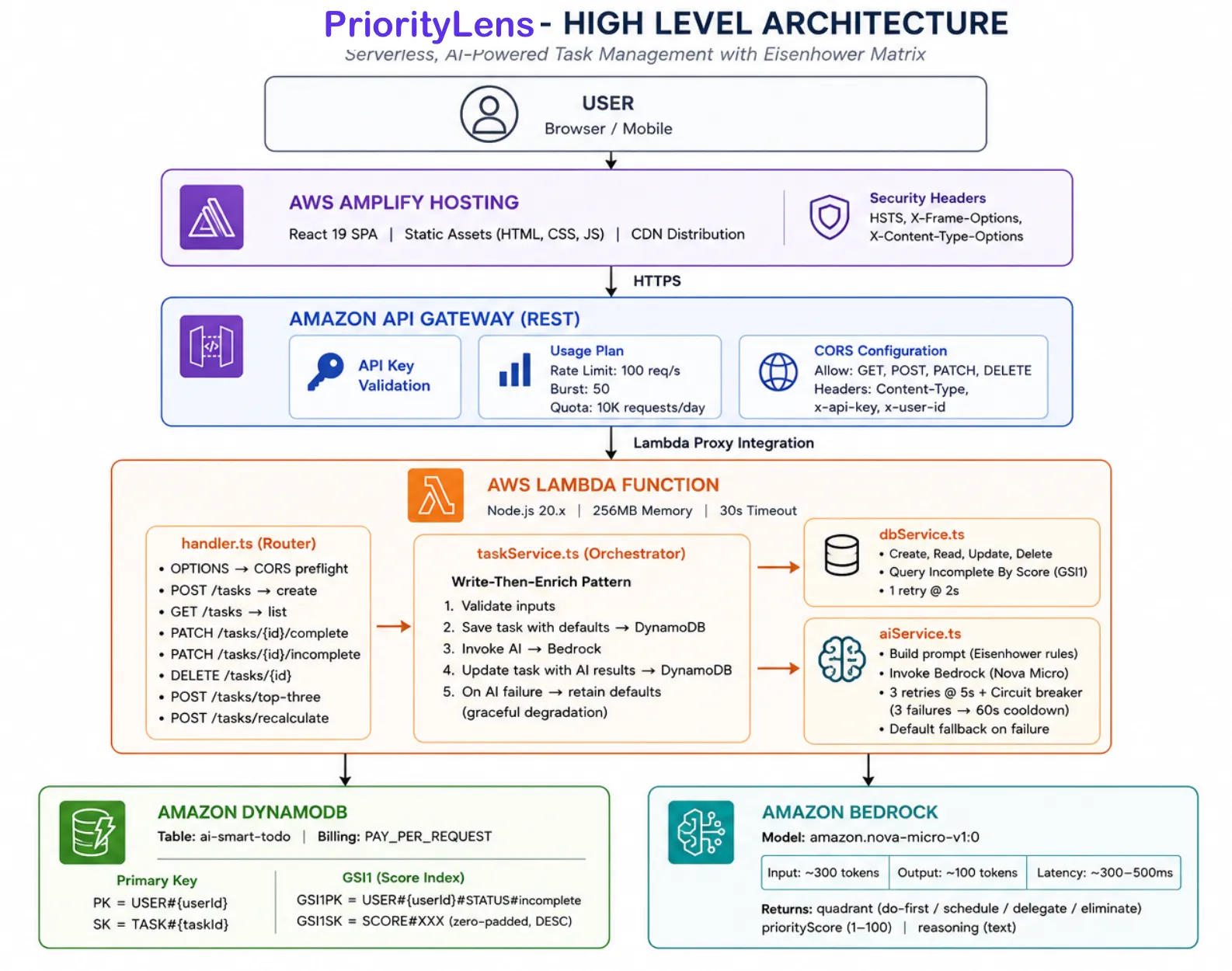
Write-then-enrich classification flow
const task = await saveTask({
  ...input,
  quadrant: 'schedule',
  priorityScore: 50
});

const aiResult = await classifyWithBedrock(task.description);
await updateTask(task.id, aiResult);
Persist first, enrich second, so users are never blocked by model latency.
Original publication
This post is adapted from the original AWS Builder Center article: Weekend Productivity Challenge: PriorityLens — AI That Sees What Matters Most
Why this project is interesting
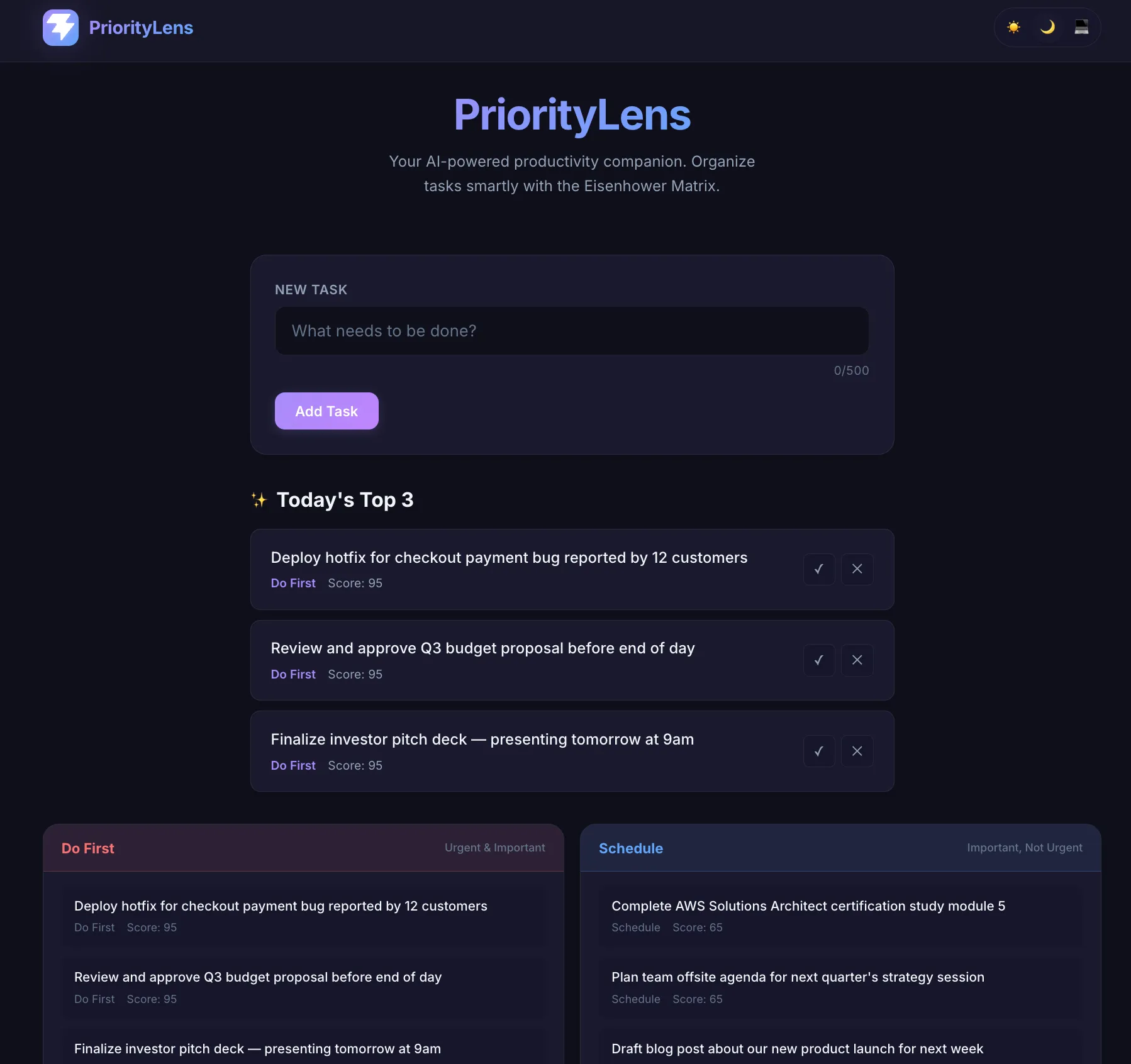
PriorityLens targets a common execution problem: task lists grow faster than attention. Instead of asking users to manually triage every item, the app uses AI to classify tasks into Eisenhower-style quadrants and surface a daily top three.
The practical value is not only UX. The implementation shows how to keep an AI-backed workflow fast, resilient, and cheap.
Product behavior
- Users enter tasks in plain language.
- The backend assigns urgency and importance signals.
- Tasks are mapped into one of four quadrants.
- A ranked top-three list is recalculated as tasks change.
Architecture choices that mattered
1. Serverless-first runtime
The app uses Lambda, API Gateway, DynamoDB, and Bedrock to avoid idle infrastructure cost and reduce operational overhead for an MVP.
2. Write-then-enrich flow
Task creation is persisted immediately with safe defaults, then enriched by AI. This keeps the interface responsive even during temporary model latency or failures.
3. Scoped model selection
A compact model tier was chosen for a narrow task: structured classification into JSON output. This matched cost and latency constraints better than larger reasoning-heavy models.
4. Defensive parsing and fallback
AI output can be noisy. The system validates and normalizes model responses so malformed output degrades gracefully instead of breaking the user journey.
Reliability patterns worth reusing
- Circuit breaker around model calls to avoid retry storms.
- Optimistic UI with rollback for fast feedback and consistency.
- Explicit input validation and API-level controls before inference.
- Data model optimized for known access patterns.
Cost and security posture
The design emphasizes low fixed cost and controlled exposure:
- Pay-per-use infrastructure for low-volume traffic.
- Key-based API access and rate limiting.
- Input validation and strict request boundaries.
- No unnecessary identity system during MVP phase.
What to take away
The strongest lesson is architectural sequencing:
- Define behavior clearly.
- Persist core data reliably.
- Add AI as enrichment, not dependency.
- Build safeguards before scale pressure arrives.
That sequence keeps the product usable even when AI systems are imperfect.
Read more
For full screenshots, prompt-engineering details, test strategy, and implementation breakdown, read the original article:
Read the full PriorityLens case on AWS Builder Center
Related posts
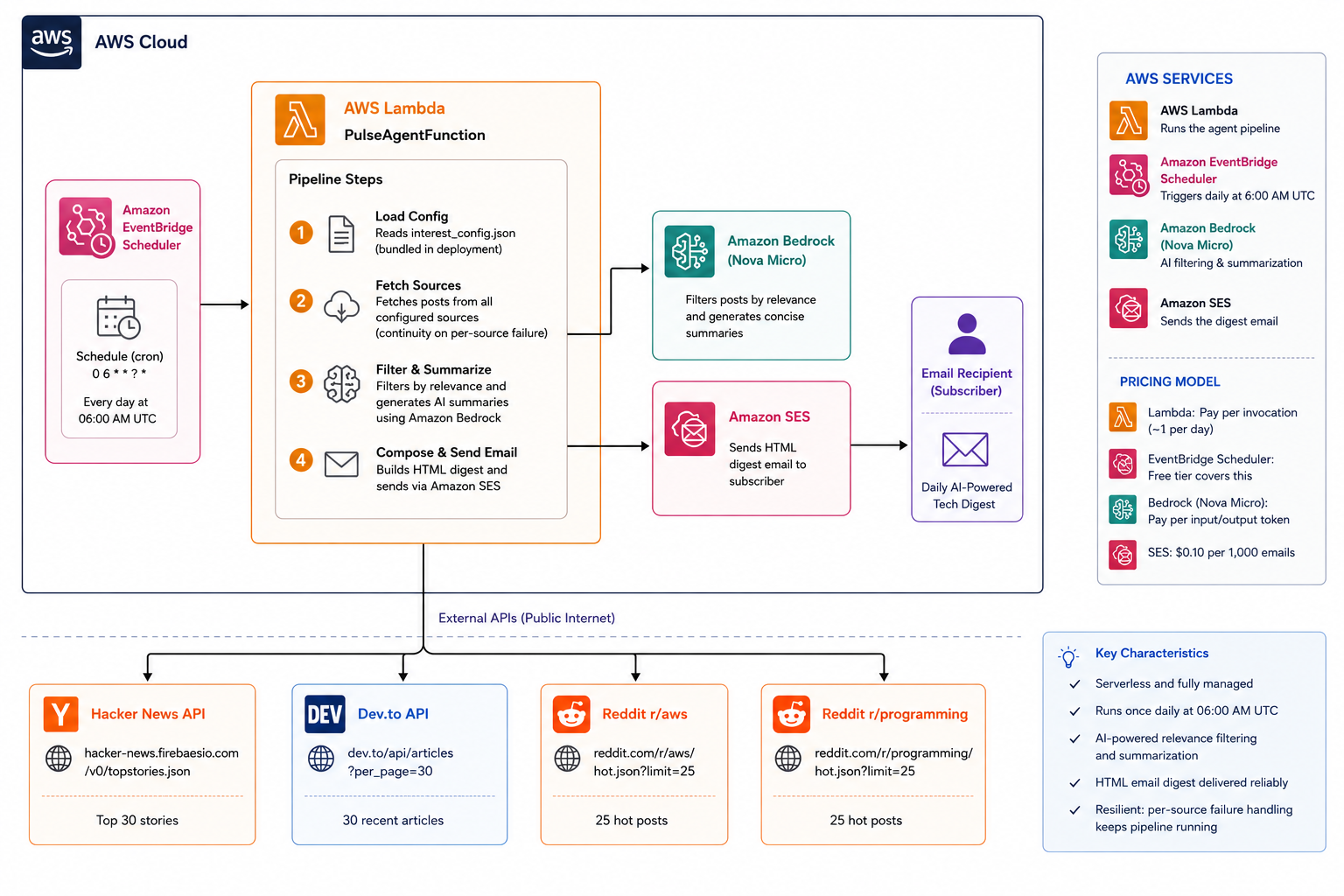
Weekend Agent Challenge: Dev Community Pulse Agent
A weekend-built serverless AI agent that wake up at 6 AM, scans developer communities/news/posts, filters what matters with Amazon Bedrock, and delivers a curated digest by email.
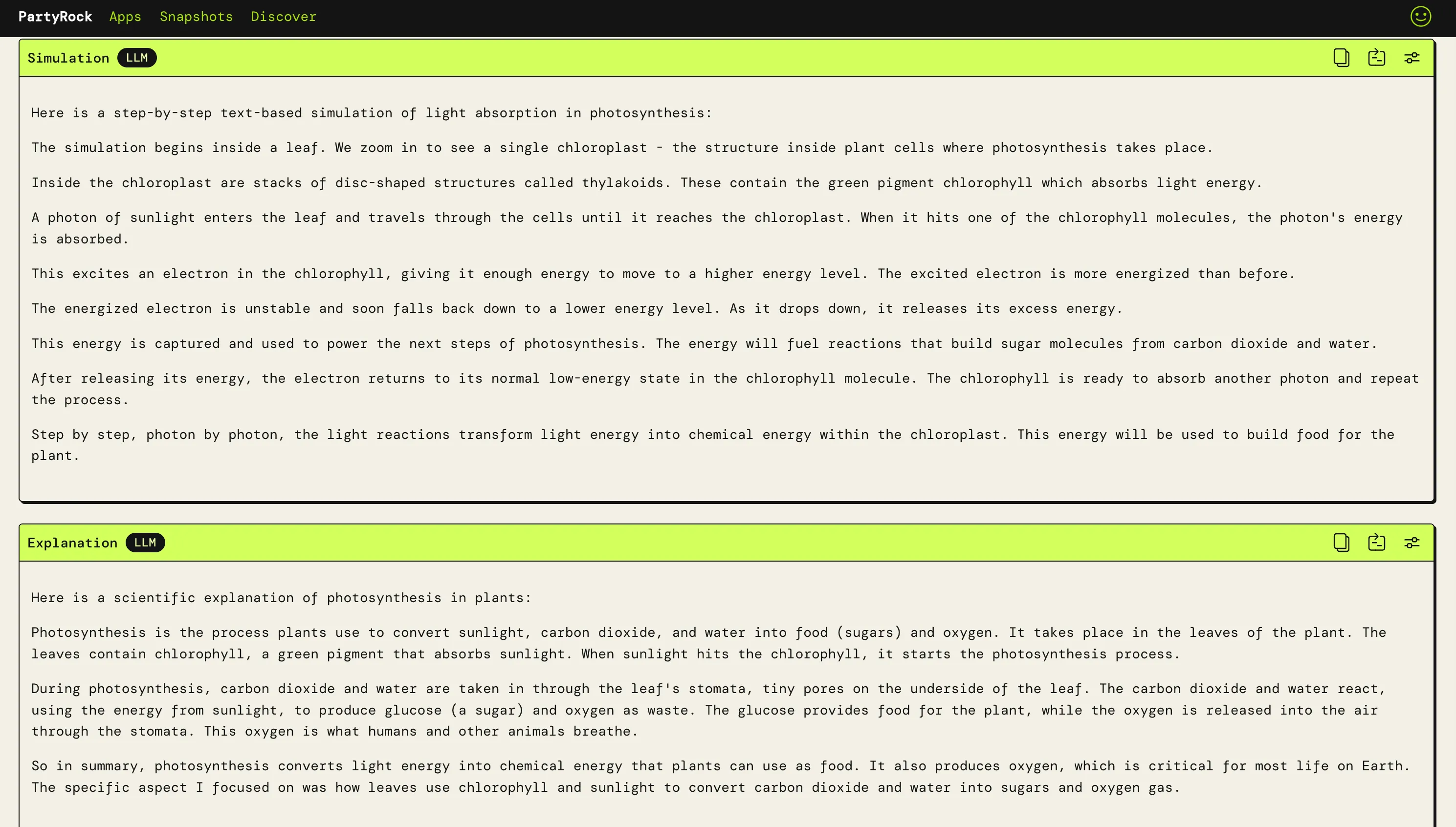
Hacking Science Learning: Building a Gen AI App with PartyRock
A practical walkthrough of creating an interactive science-learning app with PartyRock, prompt design, and no-code AI workflows.
When Generative AI Meets AWS Community Builders: AWS Cost Advisor
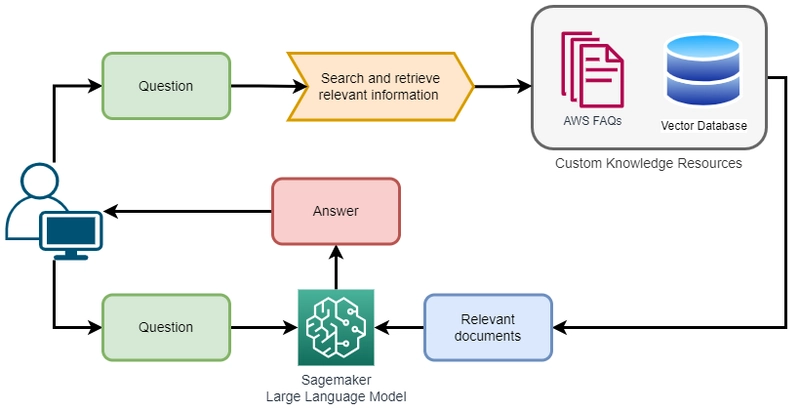
An adapted deep dive into an AI hackathon project that combines RAG, AWS SageMaker, LangChain, and FAISS to improve cloud cost optimization guidance.