Implementation of the 12-Factor App Methodology with AWS for SaaS (Part 2)
Part 2 maps 12-factor principles 4 through 8 to AWS patterns for attached resources, release separation, stateless processes, port binding, and concurrency.
Stateless process health check
process_model:
  stateless: true
  horizontal_scaling: true
  graceful_shutdown: true
runtime_contract:
  listen_port: $PORT
  backing_services_via_env: true
A minimal process contract for 12-factor style portability and scale.
Original publication
This post is adapted from the original LinkedIn article: Implementation of The 12 Factors App Methodology with AWS Cloud for a SAAS Product - Part 2
Scope of part 2
Part 2 continues the AWS mapping of 12-factor principles and focuses on factors 4 to 8:
- Backing Services.
- Build, Release, and Run.
- Processes.
- Port Binding.
- Concurrency.
4) Backing Services
Backing services should be treated as attached resources, replaceable without changing application core logic. In AWS-oriented delivery, this encourages clean abstraction around managed databases, queues, caches, and storage.
5) Build, Release, Run
Build artifacts, release configuration, and runtime execution should remain separate lifecycle stages. This separation improves auditability, rollback control, and deployment repeatability.
6) Processes
Applications should run as stateless processes where possible. State externalization simplifies scaling and recovery strategies and aligns with container and serverless process models.
7) Port Binding
Services should self-contain runtime and expose themselves through explicit port binding. This keeps deployment targets flexible and avoids hidden runtime assumptions.
8) Concurrency
Scale should come from process model replication rather than in-process complexity. Horizontal scaling with workload-aware process types keeps growth predictable.
Practical takeaway
Part 2 emphasizes operational maturity: treat infrastructure dependencies as replaceable resources, keep release lifecycle boundaries explicit, and design for horizontal process scaling from day one.
Read more
For original diagrams and deeper implementation notes, read the source article:
Read the full LinkedIn post (Part 2)
Related posts
Implementation of the 12-Factor App Methodology with AWS for SaaS (Part 1)
An AWS-oriented adaptation of 12-factor principles focused on codebase, dependency isolation, and environment-based configuration for SaaS delivery.
Implementation of the 12-Factor App Methodology with AWS for SaaS (Part 3)
Part 3 maps factors 9 through 12 to AWS-aligned operations, including disposability, dev-prod parity, log streams, and one-off admin processes.
Weekend Agent Challenge: Dev Community Pulse Agent
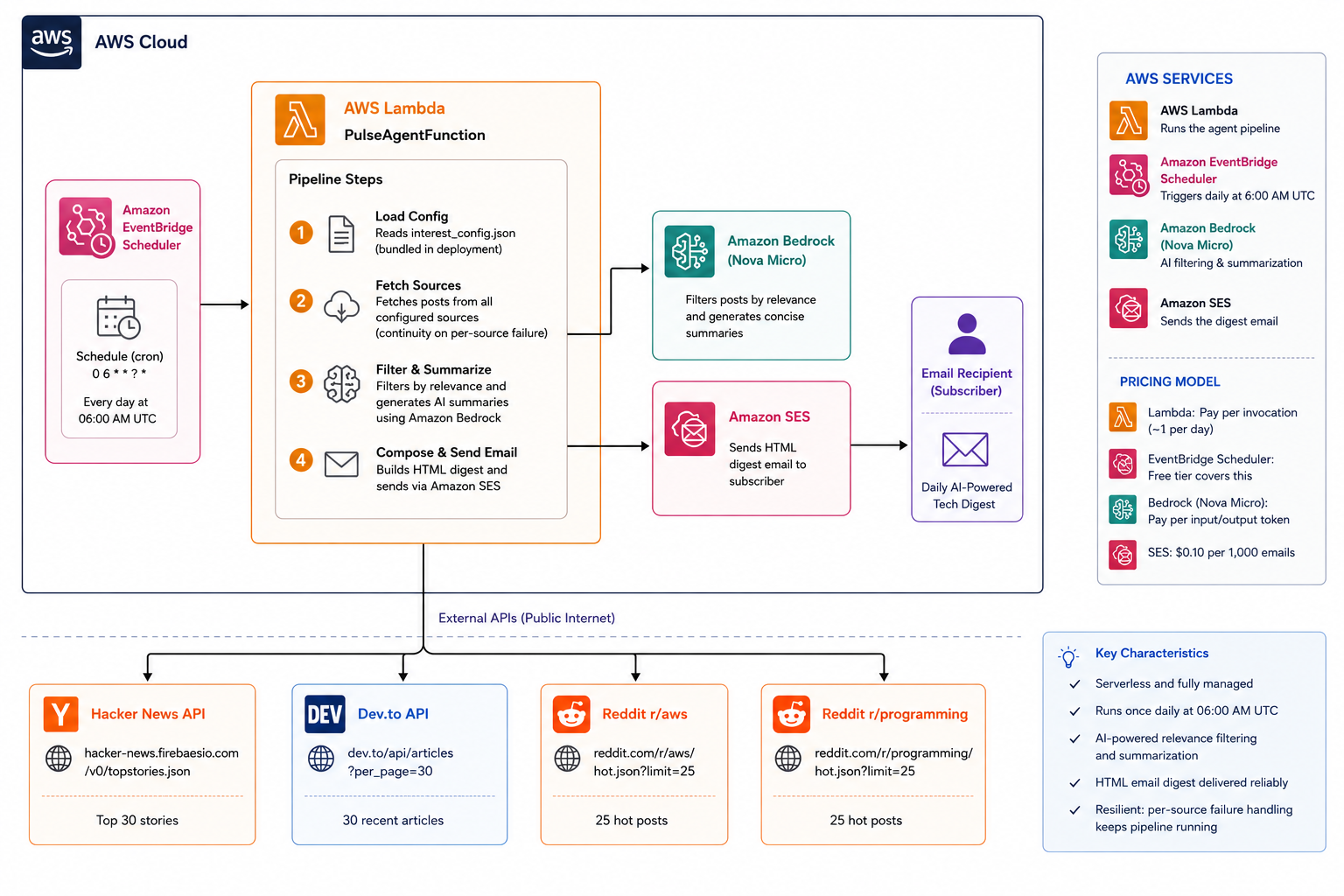
A weekend-built serverless AI agent that wake up at 6 AM, scans developer communities/news/posts, filters what matters with Amazon Bedrock, and delivers a curated digest by email.